

American Mafia History Website

The American Mafia history website logo
rattrap logo

Edmond Valin's 'Rat Trap' articles

Jump to Menu

Toronto-based Edmond Valin uses publicly available information, including declassified files of the U.S. Federal Bureau of Investigation, to track down the identities of underworld informants officially referred to only by code numbers or codenames. Contact Edmond Valin by email through mafiarattrap @ gmail.com.


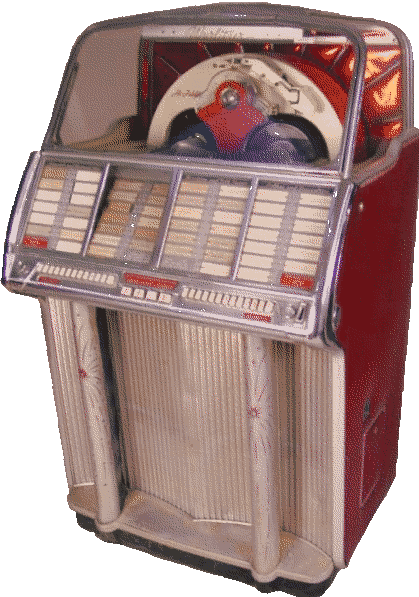
Outfit Extortionist 'Jukebox Smitty'

Jukebox

(January 2021)

"Coin-operated jukebox machines were once found in every diner, tavern and pool hall in the country. Jukeboxes filled with hundreds of record discs allowed patrons to play their favorite music whenever they wanted for as little as a dime. Jukebox vendors and business owners split the revenue fifty-fifty. The city of Chicago alone had more than a hundred commercial jukebox vendors operating over 10,000 machines during the 1950s heyday. It was a cash-only business generating millions in revenues that naturally attracted organized crime's attention....."


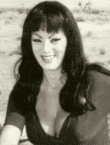
Tura Satana and the Chicago Outfit

Tura Satana

(November 2020)

"Tura Satana's 'tassel act,' incorporating acrobatic and martial arts movements, was a popular attraction on the burlesque circuit of teh 1950s... Satana was open about many aspects of her personal life. She posed nude for screen legend Harold Lloyd, she told journalists she had a romantic relationship with crooner Frank Sinatra, and she claimed she once turned down a marriage proposal from Elvis Presley. But she had another relationship that she kept secret. Satana spied on the Mafia for the Federal Bureau of Investigation..."


Two inducted members provided info on Philly Mob

Harry Riccobene

Riccobene

(December 2017)

By the early 1960s, the Federal Bureau of Investigation was able to persuade two members of the Philadelphia Crime Family to reveal confidential information about La Cosa Nostra. The informants were sons of prominent LCN members who could trace their crime family connections to the 1920s. They provided agents with an inside look at the history, structure and membership of the Philadelphia Crime Family back to its earliest days.


Banana War informant: Did Bonanno's son cooperate?

Bill Bonanno

Bill Bonanno

(November 2017)

Salvatore “Bill” Bonanno's quick rise within the Bonanno Crime Family divided the membership and set off a shooting war that the press dubbed the “Banana War.” The conflict reshaped the New York underworld and took down the last remaining boss of New York’s original five families. The Federal Bureau of Investigation had a front row seat to it all after they developed a secret source at the crime family's highest levels.


Post-Giancana Outfit was fertile soil for FBI informants

Louis Fratto

Fratto

(September 2017)

Declassified FBI documents show that more than ten Chicago Outfit members began to "talk" soon after Sam Giancana was deposed as boss and fled Chicago. The turnaround, up from virtually zero high-value informants in 1965, was due primarily to a more aggressive approach by law enforcement and the ongoing turmoil within the Outfit after a succession of bosses were quickly jailed.


Former San Francisco boss supplied info to federal agents

Anthony Lima

Lima

(April 2018)

In 1965, Anthony Lima, former boss of the San Francisco Crime Family, began sharing confidential information with federal law enforcement. He provided an insider's view of organized crime from the highest levels. Lima told agents about his induction ceremony, provided details about the history of the Pittsburgh Crime Family, and identified LCN members in Pittsburgh and the San Francisco Area.


Roemer's Men in the Outfit: 'Sporting Goods' and 'Romano'

William Roemer

Roemer

(August 2017)

According to Roemer, the three “best” Outfit informants were Richard Cain and two others who to this day are known only by their codenames, "Sporting Goods” and “Romano.” But who were "Sporting Goods" and "Romano"? A careful reading of Roemer’s books provides compelling clues. When combined with declassified FBI reports, the identities of these informants can finally be revealed.


Roemer's Men in the Outfit II: Intel provided by Ralph Pierce

Ralph Pierce

Pierce

(June 2018)

Ralph Pierce was a longtime Outfit member who controlled gambling activities on the South Side of Chicago at the time of his death in 1976. The Federal Bureau of Investigation described Pierce as "one of the top half-dozen leaders of organized crime in Chicago for decades." He was also the FBI's most productive confidential informant inside the Outfit during the 1970s.


Retired big shot provided glimpse inside Pittsburgh Mafia

Mannarino

Mannarino

(March 2018)

Samuel Mannarino was a prominent La Cosa Nostra figure in Western Pennsylvania for decades until his death in 1967. He met with FBI agents throughout the mid-1960s after being forced into retirement from the rackets. His revelations to the agents never went very far, but he did shed light on his criminal past and the history of the Pittsburgh Crime Family.


Bay-Area informants proved crucial for FBI

Cerrito

Cerrito

(February 2018)

As the FBI entered the fight against organized crime on a national level, it benefited from membership data and organizational history obtained through confidential informants from a small Mafia family in northern California. For a brief period in the 1960s, there may have been more member-informants active in San Jose than any other LCN crime family.


'Lefty' Rosenthal was high-level Outfit source for FBI

Rosenthal

Rosenthal

(August 2018)

Frank "Lefty" Rosenthal, the Outfit gambling wiz made famous through the character Sam "Ace" Rothstein in the movie Casino, fed information about organized crime activities and mob hits to the FBI under the codename, "Achilles." The full extent of Rosenthal's cooperation has remained a mystery, but newly released FBI documents show for the first time some of the information he shared with federal agents.


Giancana's buddy, Blasi aided the FBI for a decade

Cerrito

Blasi

(August 2018)

Dominic "Butch" Blasi was a La Cosa Nostra member who served as the appointment secretary to three Outfit bosses in Chicago going back to the 1950s. He was with former boss Sam Giancana on the night Giancana was killed and became the prime suspect in the murder investigation. He also was a secret informant for the Federal Bureau of Investigation. Most of Blasi's informant file remains classified, but some revealing portions recently have become available.


How 'Mafia' became 'La Cosa Nostra'

Hoover

Hoover

(September 2018)

Federal Bureau of Investigation surveillance and intelligence obtained through several early 1960s underworld informants (including a mysterious Profaci Crime Family associate whose cooperation predated Valachi's) triggered an evolution in law enforcement terminology. The old name for traditional Italian organized crime, "Mafia" was eventually discarded in favor of a new name, "La Cosa Nostra."


Vinnie Teresa cooperated much earlier than he let on

Teresa

Teresa

(October 2018)

Vincent "Fat Vinnie" Teresa achieved notoriety in the 1970s after he became a cooperating witness against the mob. The former New England Crime Family mobster testified at more than a dozen mob trials and made a televised appearance before a United States Senate committee investigating organized crime. Teresa's tales of mob life and his distinctive appearance made him the most infamous mobster in America for a time.


Salvatore Piscopo: The man who betrayed Johnny Roselli

Piscopo

Piscopo

(December 2018)

Salvatore Piscopo was a longtime member of the Los Angeles Crime Family and a close associate of mob legends Johnny Roselli and Jimmy Fratianno. Piscopo ran a large-scale gambling operation for the mob. Although he never rose higher than soldier, Piscopo had a front row seat to organized crime's infiltration of the movie industry and the gang wars that boiled over in Southern California in the 1940s and 1950s.


'Joey G' drops a dime and a body or two

Joseph Gurera

Gurera

(November 2019)

In 1967, Kansas City Outfit member Joseph Gurera began to share confidential information with the Federal Bureau of Investigation. Gurera cooperated for only a few months before he passed away, but in that short time, he helped federal agents to identify La Cosa Nostra members in three states, provided Intel about organized crime history in Kansas City and Milwaukee going back decades and cleared up numerous mob murders.


Two Gambino Family informants had very different fates

FBI report

(January 2018)

"On July 11, 1963, two men wearing makeup disguises entered the Flowers By Charm flower store in Brooklyn, New York, and fired five bullets at the owner before fleeing. Lying dead on the floor was forty-year-old Gambino Crime Family member Alfredo Santantonio... Informant Gregory Scarpa told the Federal Bureau of Investigation that "it was common talk in Brooklyn that [Santantonio] was killed because he was cooperating with the Government."


Stone Park was home to early Outfit informants

Rocco Pranno

(April 2020)

"...Besides becoming a byword for vice, Stone Park held another distinction unknown to everyone outside of the Federal Bureau of Investigation: two Outfit members who lived in the Stone Park-area were confidential informants. One was an obscure mobster who had the unique position of being on both sides of the law, while the other was a prominent gangster who ruled his territory with an iron fist. The two mobsters were friends and criminal associates, but that didn't stop them from telling on each other..."


Willie the Tile Maker passed Mafia secrets to Feds

William Dara

Dara

(January 2018)

"In the late 1960s, a Florida-based member of the Bonanno Crime Family began to cooperate with the FBI. He shed light on gangland murders, spilled secrets about LCN members and gave the FBI a front row seat to the turmoil within the Bonanno organization. His cooperation was never suspected by his crime family, and he died a member in good standing. Now, clues found in declassified FBI documents may help to reveal his identity for the first time..."


In Pittston, informing runs in the family

Joseph LaTorre

LaTorre

(June 2020)

In 1951, thirty-eight-year-old Joseph LaTorre began to share with the authorities confidential information about a criminal group called the "Organization." Joseph was the eldest son of former Pittston Crime Family boss Steven LaTorre. Before the Apalachin meeting and Joe Valachi's revelations put the Mafia on the front page, Joseph was giving federal investigators Intel about its members and criminal activity.


The Italian mobster who wasn't

Chicago

(October 2020)

"In the late 1920s, a young hoodlum from New York City moved to Chicago and became associated with the local Mafia organization called the 'Outfit.' He made a living as a 'confidence man,' a jewel thief, and a heroin dealer. He acted as 'muscle' for mobsters Fifi Buccieri and Ralph Pierce and rubbed elbows with bosses Frank Nitti and Paul Ricca. In 1963, he got jammed up and turned to the Federal Bureau of Investigation for help. He became the Outfit's first significant informer in the post-Joseph Valachi era...."